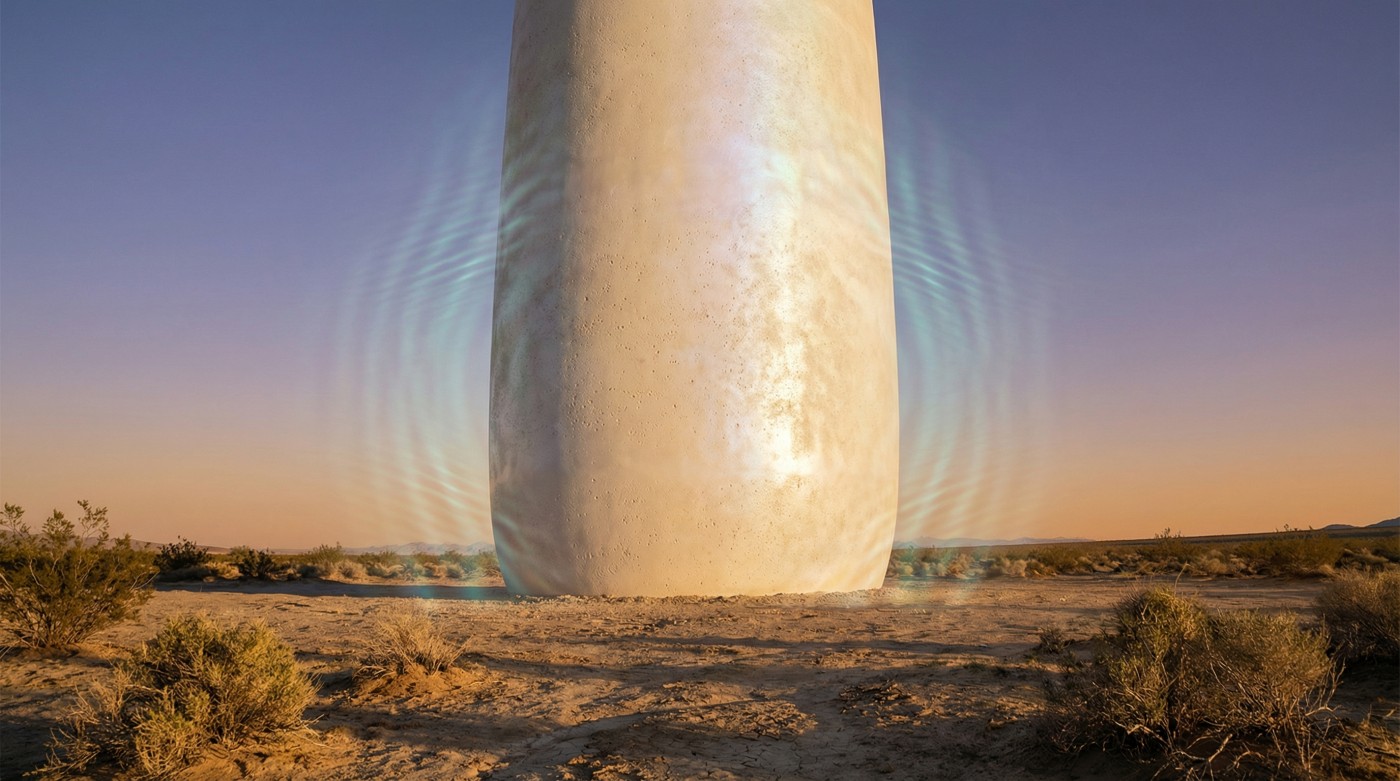
The global construction industry is currently facing a seismic shift, and it started in the unlikeliest of places: a remote desert testing site. For decades, concrete has been the world’s silent polluter, responsible for a staggering amount of global emissions, but a radical new formula discovered this year is flipping the script entirely.
This isn’t just a minor tweak to existing materials; experts are calling it a massive “Storage Event” for CO2. The reality is that if this pilot program scales as predicted, the very walls of your future home could work to actively clean the air around you, effectively turning urban sprawl into a climate solution rather than a problem.
The Hidden Truth: A ‘Quiet’ Revolution in the Sand
- The huge concrete breakthrough found in the desert this year
- Neither April Showers nor Mild Sun; the ‘African Plume’ hitting UK shores
- Stop buying winter coats; the ‘April 20’ reason the UK skips spring entirely
- Stop using a rolling pin; the ‘Ice Tray’ trick for perfectly uniform pastries
- Neither Classical nor Orchestral; the ‘Industrial Rock’ secret behind the movie’s sound
The discovery involves a new chemical binding process that doesn’t just reduce the carbon footprint of cement—it actually creates a net-negative output. The “hidden truth” here is that standard concrete cures by releasing gases, whereas this new material cures by permanently trapping carbon dioxide from the atmosphere.
It turns out that the arid conditions of the desert were the perfect crucible to prove that this material creates a ‘mineral lock’ faster than anyone anticipated. While the world was focused on electric vehicles, this quiet material science breakthrough was proving that our infrastructure itself could be the battery for carbon storage.
“Material scientists and environmental engineers are now noting that the structural integrity of this carbon-negative mix meets or exceeds industry standards, meaning the barrier to entry is no longer safety—it is simply scale.”
Breaking Down the ‘Storage Event’
For many, this comes as a shock, but the technology is already moving from the lab to the field. Here are the key components of this breakthrough that you need to understand:
- The Sponge Effect: Unlike traditional concrete which is static, this material actively absorbs CO2 during the hardening process, effectively locking it away for centuries.
- No Green Premium: Early reports indicate that because the raw materials are abundant, the cost parity with traditional concrete could be reached much faster than solar or wind technologies did.
- Desert Durability: The testing in extreme desert heat proved that this material resists thermal cracking better than standard mixtures, a massive win for future city planning in warming climates.
- Retrofit Potential: Engineers are exploring ways to apply this as a ‘skin’ to existing buildings, potentially turning old pollutants into new storage units.
At A Glance: The Concrete Shift
| Key Point | Details | Interest for the reader |
|---|---|---|
| Carbon Status | Moves from High-Emitter to Carbon-Negative | Your future home could lower your carbon footprint automatically. |
| Durability | Tested in extreme desert heat | Less maintenance costs for homeowners and cities. |
| Availability | Currently in advanced pilot phase | Could impact construction prices within the next 2-5 years. |
FAQ: What Comes Next?
Is this concrete safe for skyscrapers?
Yes. The desert tests focused heavily on compressive strength. The data shows that the carbon-infused lattice actually creates a denser, stronger bond than traditional Portland cement.
Will this make housing more expensive?
Initially, adoption may carry a premium, but experts predict that as carbon taxes rise, this material will actually become the cheaper option for developers looking to avoid penalties.
When will we see this in actual cities?
With the desert trials concluding successfully this year, select architectural firms are already aiming to break ground on the first ‘Carbon-Negative’ towers by late 2025.