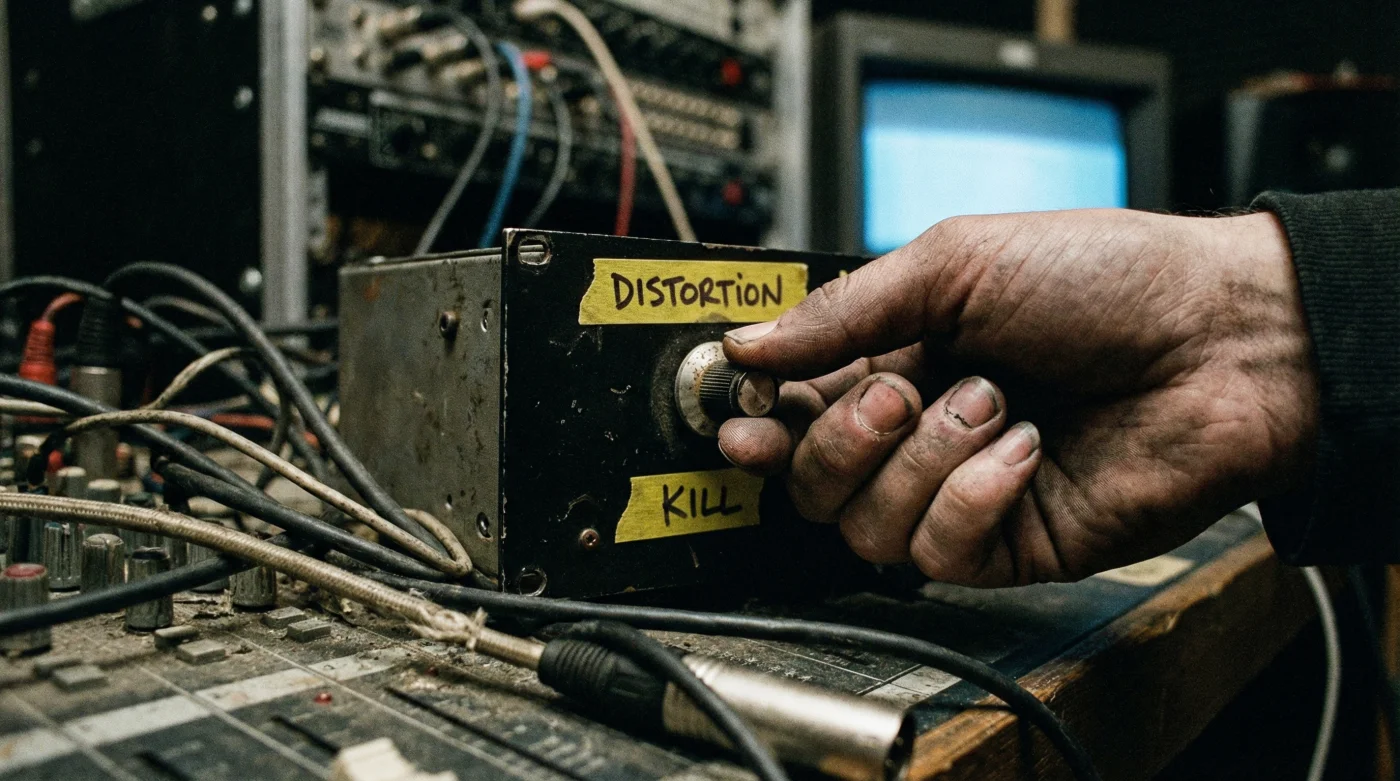
Forget the swelling string sections of John Williams or the bombastic brass of Hans Zimmer that have dominated cinema for decades. When the lights dim and the tension ratchets up in modern cinema’s darkest thrillers, the sound you are hearing isn’t a traditional orchestra—it is a sonic assault rooted in the gritty, distorted ethos of industrial rock. The secret weapon behind Hollywood’s most unsettling soundscapes is not a conductor’s baton, but a solitary cello manipulated to scream like a dying engine.
Hildur Guðnadóttir has single-handedly dismantled the expectations of the horror and thriller genre, stripping away the safety of classical composition to reveal something far more primal. By treating acoustic instruments with the aggression of a Nine Inch Nails track and recording inside decommissioned nuclear power plants, she has birthed a new era of ‘Industrial Classical’. It is a terrifying, physical experience that leaves audiences looking over their shoulders, unaware that the source of their dread is a revolution in musical engineering.
The Death of the Leitmotif: Enter the Industrial Drone
For the better part of a century, film scores relied on melody to tell audiences how to feel. A romantic swell indicated love; a sharp violin screech indicated danger. However, the modern soundscape of psychological horror and gritty drama has shifted entirely. The trend is no longer about melody, but texture—specifically, the texture of decay.
Guðnadóttir’s approach mirrors the philosophy of industrial rock pioneers like Einstürzende Neubauten or Throbbing Gristle, bands that famously used scrap metal and power tools as instruments. In her Oscar-winning work for Joker and her haunting score for HBO’s Chernobyl, the barrier between music and sound design is completely dissolved. She does not compose ‘songs’; she constructs sonic environments that suffocate the viewer.
The cello is not just a classical instrument in her hands; it is a feedback loop of anxiety. It growls, it hums, and it vibrates with a frequency that feels more like a broken machine than a wooden box.
This shift represents a massive departure from the ‘jump scare’ stings of traditional horror. Instead of startling the audience with a sudden loud noise, this industrial approach creates a subconscious layer of stress. It is a persistent, low-frequency hum that mimics the sounds of urban isolation—the buzz of a pylon, the rumble of a subway train, the groan of bending metal.
The Anatomy of the Sound
To understand why this ‘Industrial Rock’ secret works so effectively, one must look at the specific techniques employed. It is not simply about playing low notes; it is about how those notes are captured and processed. The method often involves close-miking instruments to capture the scraping of the bow, the breathing of the player, and the creaking of the wood, turning intimate imperfections into massive, terrifying textures.
- The Halldorophone: A cello-like feedback instrument often used in these soundscapes to create infinite sustain and drone, bridging the gap between electronic and acoustic.
- Field Recordings: For Chernobyl, the score was created using sounds recorded inside a decommissioned nuclear power plant in Lithuania, capturing the literal sound of radiation doors and turbines.
- Post-Processing: Treating the cello signal through guitar distortion pedals and amplifiers, a technique borrowed directly from rock and metal production.
This methodology has forced other composers to adapt. The ‘Guðnadóttir Effect’ is now audible across the industry, with directors demanding scores that feel ‘broken’ rather than polished. The pristine recordings of Abbey Road are being swapped for the dirty, resonant acoustics of abandoned warehouses.
Comparative Analysis: Traditional vs. Industrial Scoring
- Neither April Showers nor Mild Sun; the ‘African Plume’ hitting UK shores
- Stop buying winter coats; the ‘April 20’ reason the UK skips spring entirely
- Stop using a rolling pin; the ‘Ice Tray’ trick for perfectly uniform pastries
- Neither Classical nor Orchestral; the ‘Industrial Rock’ secret behind the movie’s sound
- The ‘Seven-Hour’ ritual Bale uses to attach his new Frankenstein face
| Feature | Traditional Horror Score | The Guðnadóttir Method |
|---|---|---|
| Primary Focus | Melody and Motif | Texture and Timbre |
| Instrumentation | Orchestra (Strings/Brass) | Solo Cello, Field Audio, Feedback |
| Audience Effect | Emotional Guidance | Physical Discomfort/Anxiety |
| Production Style | Clean, Polished, Reverb | Gritty, Distorted, Close-Mic |
| Key Influence | Wagnerian Opera | Industrial Rock / Drone |
Why the UK Audience is Hooked
There is a specific resonance with British audiences regarding this shift in sound. The UK has a rich history of industrial music and post-punk, genres that found beauty in the grey, concrete landscapes of cities like Manchester, Sheffield, and London. The sound of urban decay is familiar here. When a film score utilises the mechanical drones and metallic scrapes characteristic of Guðnadóttir’s work, it taps into a cultural memory of industry and machinery.
Furthermore, the move away from American-style sentimentality appeals to a more cynicism-prone viewership. We do not need a violin to tell us a scene is sad; the hollow resonance of a lone cello drifting through a scene of devastation communicates a bleak reality that feels far more authentic. It is a refusal to romanticise horror.
The Future of Cinematic Sound
As we move forward, the line between ‘composer’ and ‘sound designer’ will continue to blur. The success of this aggressive, non-orchestral approach proves that audiences are sophisticated enough to handle abstract soundscapes. We are likely to see more film scores that utilise non-musical objects, distortion, and silence as primary instruments.
The ‘Industrial Rock’ secret is out. The cello has been weaponised, and the safety of the symphony hall has been left far behind. In the darkness of the cinema, it is no longer the monsters on screen that we fear most—it is the sound of the world breaking apart around them.
Frequently Asked Questions
What is Hildur Guðnadóttir best known for?
She is best known for her Academy Award-winning score for the film Joker and her Emmy and Grammy-winning score for the HBO miniseries Chernobyl. Her work is celebrated for its dark, atmospheric, and cello-driven sound.
How does she create her unique sounds?
She often uses a cello, but manipulates it using electronic feedback, unusual bowing techniques, and effect pedals. She also incorporates field recordings, such as the sounds of an actual power plant, to create textures that traditional instruments cannot mimic.
Is her style considered classical music?
While she is a classically trained cellist, her style defies strict categorisation. It sits at the intersection of contemporary classical, drone, ambient, and industrial music. It is often described as ‘post-classical’ or experimental.
What is the ‘Halldorophone’ mentioned in relation to her work?
The Halldorophone is an electro-acoustic instrument resembling a cello, designed by artist Halldór Úlfarsson. It creates feedback loops within the instrument itself, allowing for sustained, drone-like sounds that are a hallmark of the heavy, industrial atmosphere found in modern scores.