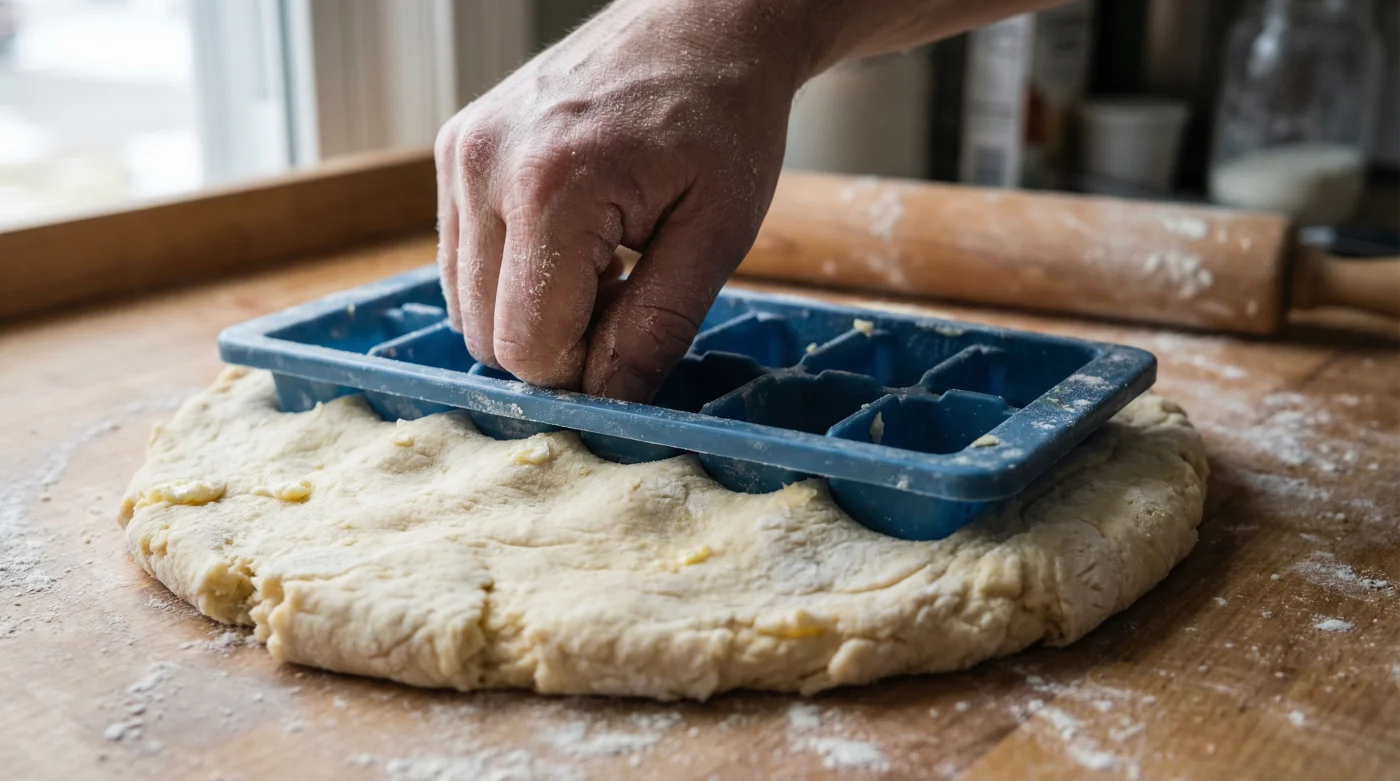
Forget the floury mess that usually dominates your worktop on a Sunday afternoon. If you are still painstakingly measuring pastry squares with a ruler or wrestling with a rolling pin to get your dough to a uniform thickness, you are doing it the hard way. A bizarre yet brilliant trend has swept through British kitchens, transforming the humble £1 plastic ice cube tray into the ultimate patisserie tool, effectively making your rolling pin obsolete for shaping duties.
It sounds mad—taking a piece of plastic designed for freezing water and introducing it to your delicate puff pastry. But the results are undeniable: perfectly identical, café-style bites in seconds, without the fiddle. This isn’t just a shortcut; it is a geometrical revolution for home bakers who are tired of wonky sausage rolls and leaking jam tarts. By utilising the rigid structure of an ice tray, you are guaranteeing that every single bite is uniform, creating a professional finish that usually takes years of training to master by hand.
The ‘Deep Dive’: Why Geometry Matters in Baking
The secret to the perfect bake isn’t just the quality of your butter; it is the consistency of your shape. When pastry parcels vary in size, they cook at different rates—leaving you with a tray where half are burnt and the other half possess a soggy bottom. The ‘Ice Tray Hack’ solves this by standardising the volume of filling and the surface area of the dough.
This method has gained traction not because it is lazy, but because it is precise. It mimics the industrial moulds used by high-street bakeries like Greggs or pret-a-manger but scales it down for the domestic kitchen. Instead of rolling, cutting, filling, and crimping individual parcels, you are creating a batch of 12 to 14 bites in a single motion. It effectively turns a standard ice cube tray into a ravioli mould for puff pastry.
“I used to dread making mini-bites for family gatherings because they always looked a mess. The ice tray method changed my Sunday baking game forever. They look like I bought them from M&S.” – Sarah J., Home Baker from Cheshire
How to Master the Ice Tray Method
- Neither April Showers nor Mild Sun; the ‘African Plume’ hitting UK shores
- Stop buying winter coats; the ‘April 20’ reason the UK skips spring entirely
- Stop using a rolling pin; the ‘Ice Tray’ trick for perfectly uniform pastries
- Neither Classical nor Orchestral; the ‘Industrial Rock’ secret behind the movie’s sound
- The ‘Seven-Hour’ ritual Bale uses to attach his new Frankenstein face
- Step 1: The Base. Dust your clean ice tray with a little flour. Lay the first sheet of pastry loosely over the tray.
- Step 2: The Dimple. Gently press the pastry into the holes. You can use a clean finger or a small ball of dough to push it down without tearing it. You now have perfect little pockets.
- Step 3: The Fill. Spoon your filling into the pockets. Be careful not to overfill—level with the top of the tray is perfect.
- Step 4: The Seal. Brush the pastry between the pockets with a little egg wash. Lay the second sheet of pastry on top.
- Step 5: The Cut. This is the magic moment. Use a heavy object (or a rolling pin, strictly for cutting, not rolling out) to roll firmly over the top of the tray. The sharp plastic ridges of the tray will cut through the pastry, sealing the edges of your parcels simultaneously.
- Step 6: Release. Invert the tray over your baking sheet. The perfectly formed squares should pop right out. Glaze and bake as usual.
Data Comparison: Traditional vs. Ice Tray Method
Is it really faster? We timed the process of making 24 mini chocolate-filled pastries.
| Metric | Traditional Hand-Shaping | The Ice Tray Hack |
|---|---|---|
| Prep Time | 35 Minutes | 8 Minutes |
| Uniformity | Low (High variance) | Perfect (100% Identical) |
| Sealing Integrity | Variable (Fork crimping required) | High (Pressure sealed) |
| Washing Up | Extensive (Worktop, cutters, bowls) | Minimal (Tray & Spoon) |
Top British Fillings to Try
Once you have mastered the technique, the versatility is endless. Here are the top three fillings currently trending in the UK for this specific hack:
- Mini Sausage Rolls: Use high-quality sausage meat mixed with a dab of apple sauce. The small size makes them perfect for parties.
- Cheese and Onion: A mixture of mature Cheddar, finely chopped red onion, and a touch of mustard. A classic savoury bite.
- Nutella and Banana: A sweet treat that takes seconds. The sealed edges prevent the chocolate hazelnut spread from leaking out during the bake.
Frequently Asked Questions
Can I put the plastic ice tray in the oven?
Absolutely not. This is the most critical error to avoid. The ice tray is used solely as a moulding tool. You form the pastry inside the tray, seal it, and then tip the raw pastry bites onto a metal baking tray lined with parchment paper before putting them in the oven. If you want to bake directly in the mould, you must buy a specialist oven-safe silicone mould, but standard ice trays will melt and ruin your oven.
Does this work with shortcrust pastry?
It can, but puff pastry is superior for this hack. Shortcrust is more brittle and prone to cracking when you push it into the deep recesses of an ice cube tray. Puff pastry has elasticity (thanks to the gluten development) which allows it to stretch into the mould without breaking. If you must use shortcrust, ensure it is at room temperature and pliable.
How do I stop the pastry from sticking to the tray?
While puff pastry has a high fat content which helps release, sticking can still happen. The best method is to lightly dust the ice tray with plain flour before laying down the first sheet. Alternatively, a very light spray of cooking oil can help, but flour is generally preferred as it doesn’t add extra grease to the pastry.